Varicose Veins
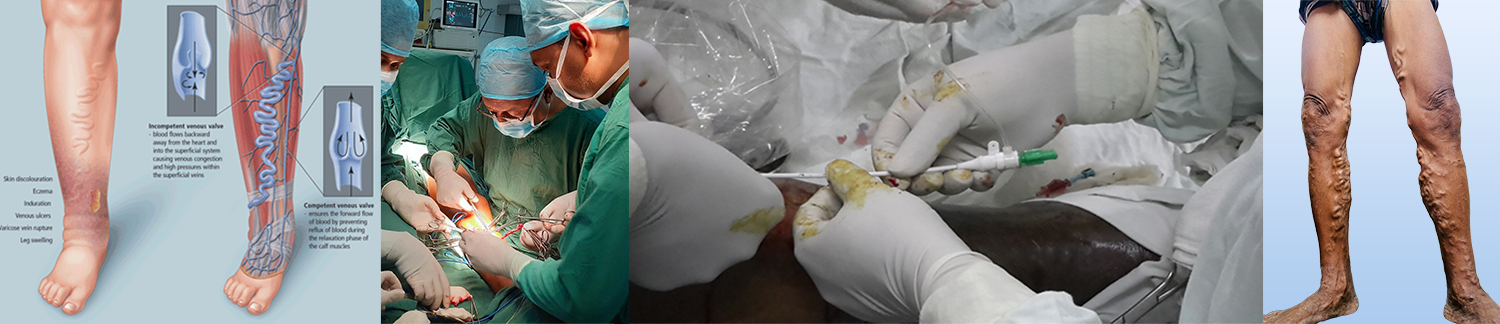
Varicose veins are tortuous dilated segments of vein associated with valvular incompetence.They arise from incompetent valves, which permit blood flow from the deep venous system to the superficial venous system (mainly at the sapheno-femoral junction and sapheno-popliteal junction, but other perforating veins exist). This results in venous hypertension and subsequent dilatation of the superficial venous system.
98% of varicose veins are primary idiopathic varicose veins. Secondary causes may include deep venous thrombosis, pelvic masses (e.g. pregnancy or uterine fibroids), or arteriovenous malformations (such as Klippel-Trenaunay Syndrome).
Check if you have varicose veins. Varicose veins do not always need treatment. Specialists will determine if you need treatment or tests based on the severity of your symptoms and the appearance of your veins.
Cause Of Varicose Veins
Varicose veins are caused by increased blood pressure in the superficial veins. While varicose veins usually don’t co-occur with blood clotting disorders such as deep vein thrombosis (DVT), which affects the deep veins of the legs, you should be aware of signs of blood clots that could indicate a more serious medical issue. These include pain, swelling, and redness of the leg.
How Vericose vein formed
Signs & Symptoms Of Varicose Veins
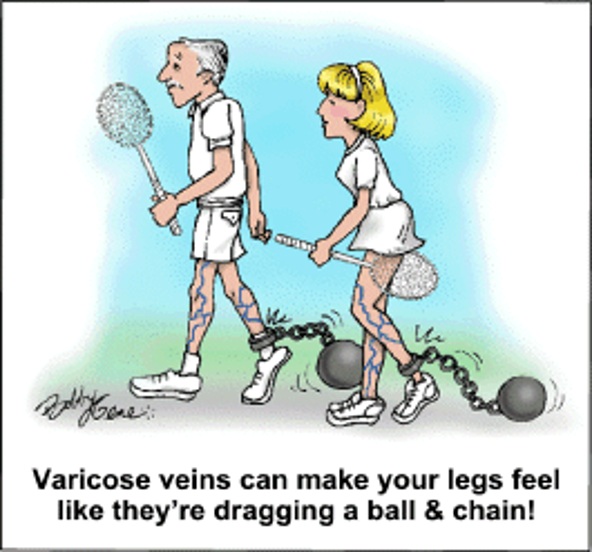
The most obvious symptom of varicose veins is the appearance of dark or bluish-colored veins visible through the skin. In many cases, varicose veins may not cause any pain or serious symptoms. When additional symptoms do occur, they may include:
- • Feelings of heaviness, burning, throbbing, or aching in the legs.
- • Muscle cramping or swelling in the lower legs.
- • Worsening pain after sitting or standing for a long time.
- • Color changes in the skin.
- • Itching, rashes, or sores on the legs.
Risk Factors
Several risk factors can increase the chances of developing varicose veins:
- • Family history of spider or varicose veins
- • History of blood clots
- • Overweight or obesity
- • Older age
- • Sedentary lifestyle or prolonged standing
- • Leg injury
- • Pregnancy
- • Smoking
- • Using oral contraceptive pills or hormone replacement
Treatment Options of Varicose Vein
A. Conservative treatment :
- • Avoid long period of standing and sitting.
- • Intermittent elevation of legs while sitting and lying down ( wedge )
- • Avoidance of crossing of leg.
- • Maintaining of ideal body weight.
- • Exercise regularly. Walking is especially beneficial.
- • Local treatment of varicose ulcer ( 4 layer dressing )
- • Drugs : MPFF ( Phlebotropic drugs )
B. Compression Stockings :
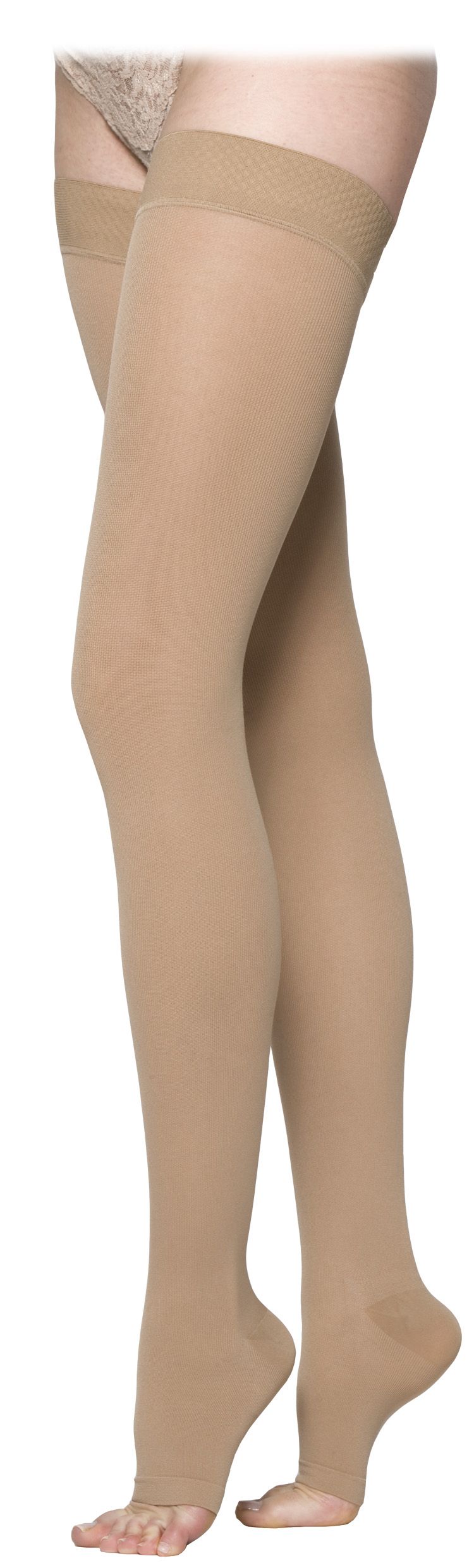
Compression stockings are typically utilized post-treatment, or for less severe instances of vein disease. The vein experts at Desert Vein Institute are Certified Fitters for compression stockings.
C. Surgery :
- • Flush ligation of GSV at SFJ with stripping of GSV & multiple phlebectomies.
- • Ligation of SSV at SPJ with phlebectomies.
- • Ligation of perforator veins.
- • Hook Phlebectomy.
- • Modified Lintons Procedure.
D. Endovenous procedure :
VanaSeal
The VenaSeal closure system is a non-sclerosant, non-thermal, non-tumescent procedure that uses a medical glue. The adhesive is injected into the vein and glues the vein shut. Gluing the vein shut eliminates the risk of damaging nerves while treating the small saphenous vein. Clinical studies have demonstrated that the procedure is safe and effective. The procedure is performed without the use of tumescent anesthesia, minimizing patient discomfort associated with multiple needle sticks.
RFA
The “gold standard” of varicose vein treatment, RFA is a minimally invasive procedure in which a catheter is inserted into the damaged vein. Radiofrequency (RF) energy is directed via the catheter into the vein walls, and the affected vein responds by sealing itself shut. The faulty vein is eventually reabsorbed by the body, while blood flow is redirected to healthy veins. Among the many advantages of this oft-requested procedure are little or no discomfort to the patient and minimal bruising. Patients can usually return quickly to a normal activity level.
Laser Vein Treatment (EVLT)
In this procedure, a laser is inserted into a leg vein and a laser light causes the affected vein to close; blood then flows through healthy veins that surround the damaged vein.
Mechanochemical ablation (MOCA)
- • Endothermal techniques require the use of tumescent anesthesia to neutralize the heat produced during treatment.
- • Tumescent anesthesia is associated with patient discomfort and is a time consuming step in endothermal procedures.
- • Also, heat related complications, like skin burn, paresthesia and prolonged post procedural pain are described despite the use of tumescent anesthesia.
- • Searching for new techniques to minimize the negative effects of endothermal ablation, a method to occlude varicose veins in a mechanochemical way was introduced.
E. Sclerotheraphy :
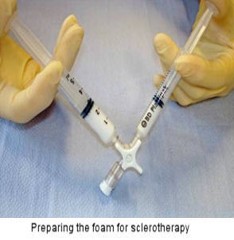
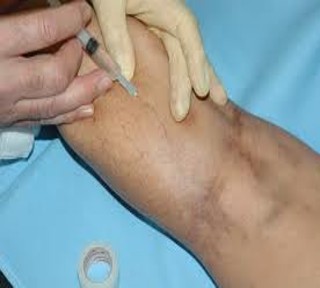
Using Ethanolamine oliate, STS, Polidocanol.
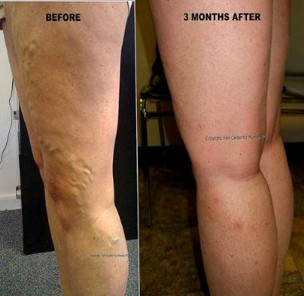
In the case of spider veins – the tiny, asymptomatic veins that appear on the face, head, chest and legs and look like road map lines or cobwebs – the treatment of choice is usually sclerotherapy. For this minimally invasive procedure, a chemical agent, or sclerosant, is injected through a tiny needle into the vein. The solution causes the damaged vein to corrode, and the body reabsorbs it while blood flow is redirected to healthy veins. Sclerotherapy involves little if any pain and bruising.